Total Hip Replacement: When Is It Needed? Signs, Causes & Benefits

Common Causes of Knee Pain and When to See an Orthopedic Surgeon
August 7, 2026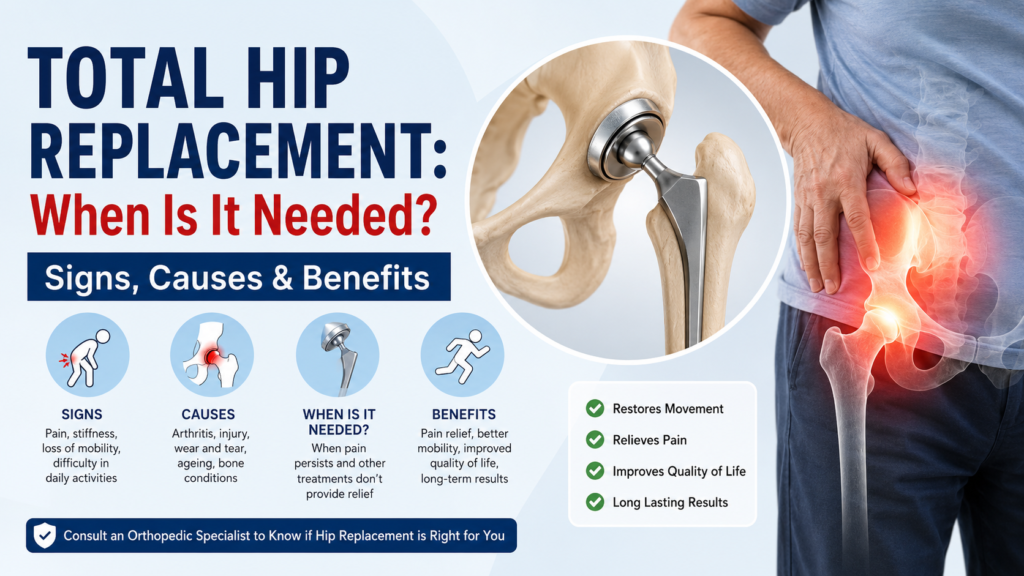
Hip pain can gradually affect walking, sleeping, working, and everyday activities. When medications, physiotherapy, lifestyle changes, and other conservative treatments no longer provide adequate relief, total hip replacement may become an option.
Patients considering surgery should consult qualified specialists, such as the best orthopaedic surgeons in aligarh, for a proper evaluation and personalized treatment plan. Understanding the signs, causes, procedure, and potential benefits can help patients make informed decisions about their hip health.
What Is Total Hip Replacement?
Total hip replacement is a surgical procedure that replaces damaged parts of the hip joint with artificial components. The hip is a ball-and-socket joint, where the rounded head of the thigh bone fits into the socket of the pelvis. When cartilage and bone become severely damaged, movement can become painful and restricted.
During surgery, the damaged femoral head is replaced with an artificial ball, while the damaged socket is replaced with a prosthetic component. Depending on the patient’s age, bone quality, activity level, and overall health, the surgeon selects appropriate implant materials and surgical techniques.
The main objective is to reduce pain, improve joint function, and help patients return to everyday activities more comfortably.
When Is Total Hip Replacement Needed?
Not every person with hip pain requires surgery. Doctors generally consider joint replacement when symptoms are persistent, significantly affecting quality of life, and have not improved sufficiently with non-surgical treatments.
Common situations in which surgery may be recommended include:
- Severe and persistent hip pain
- Difficulty walking or climbing stairs
- Pain that interferes with sleep
- Significant stiffness and reduced hip movement
- Difficulty performing routine activities
- Advanced joint damage visible on imaging
- Limited improvement from medication, physiotherapy, injections, or lifestyle modifications
A thorough medical assessment is essential before deciding on surgery. Doctors may evaluate symptoms, physical movement, medical history, X-rays, and other diagnostic tests to determine whether joint replacement is appropriate.
Common Causes of Severe Hip Damage
Several conditions can gradually damage the hip joint and lead to the need for replacement surgery.
Osteoarthritis
Osteoarthritis is one of the most common causes of severe hip pain. The protective cartilage covering the joint gradually wears away, resulting in friction between the bones. This can cause pain, stiffness, inflammation, and reduced mobility.
Rheumatoid Arthritis
Rheumatoid arthritis is an autoimmune condition that can cause inflammation and progressive damage within the hip joint. Persistent inflammation may eventually affect cartilage and bone.
Hip Fractures
A serious fracture involving the hip, particularly in older adults, can sometimes cause permanent joint damage. Depending on the fracture and the patient’s condition, joint replacement may be considered.
Avascular Necrosis
Avascular necrosis occurs when the blood supply to the femoral head is reduced or interrupted. Without adequate blood flow, bone tissue can deteriorate and eventually collapse, causing significant pain and disability.
Previous Hip Problems or Injuries
Certain childhood hip disorders, previous injuries, or structural abnormalities can increase the likelihood of developing severe hip problems later in life.
Signs That Should Not Be Ignored
Recognizing progressive hip problems early can help patients receive appropriate treatment. Important warning signs include persistent groin or hip pain, discomfort that extends toward the thigh or knee, stiffness after sitting, difficulty putting on shoes or socks, reduced walking ability, and pain that becomes worse with normal activities.
Pain that consistently disrupts sleep or prevents someone from performing routine tasks deserves medical attention. However, these symptoms do not automatically mean surgery is required. A specialist must determine the underlying cause and severity.
Benefits of Hip Replacement Surgery
For appropriately selected patients, hip replacement can provide several meaningful benefits. The most important is often substantial reduction in chronic pain. Many patients also experience improved mobility and greater confidence while walking.
Other potential benefits include:
- Better ability to perform daily activities
- Improved hip movement
- Greater independence
- Improved sleep when pain previously caused nighttime discomfort
- Increased participation in suitable physical activities
- Better overall quality of life
Recovery varies from person to person. Age, general health, muscle strength, surgical technique, implant type, and adherence to rehabilitation recommendations can all influence recovery.
What to Expect After Surgery
Recovery begins soon after the operation. Patients are usually encouraged to start appropriate movement and rehabilitation under professional guidance. Physiotherapy can help restore strength, flexibility, balance, and functional movement.
Following the surgeon’s instructions is important during recovery. Patients should take prescribed medicines correctly, attend follow-up appointments, maintain a healthy body weight, and gradually increase activity rather than rushing back to strenuous exercise.
Quick Takeaways
- Severe hip pain does not always require surgery.
- Joint replacement is generally considered when significant symptoms persist despite appropriate non-surgical treatment.
- Arthritis, fractures, avascular necrosis, and other conditions can cause advanced hip damage.
- Proper diagnosis and imaging help determine the most suitable treatment.
- Rehabilitation plays an important role in recovery.
- Discussing individual risks and expected outcomes with an experienced orthopaedic specialist is essential.
How to Prepare for a Hip Replacement Consultation
Before your appointment, make a list of your symptoms, how long they have been present, activities that increase pain, previous treatments, and current medicines. Bring relevant medical reports and imaging studies if available.
It is also useful to ask about the expected benefits, possible complications, implant options, recovery timeline, physiotherapy, restrictions, and when normal activities can be resumed. These questions can help you understand whether surgery is appropriate for your individual circumstances.
Patients looking for comprehensive orthopaedic evaluation and treatment can discuss their concerns with the specialists at Renuka Hospital Aligarh, where treatment decisions should be based on clinical assessment and individual patient needs.
Conclusion
Severe hip pain, stiffness, and declining mobility can significantly affect quality of life, but surgery is not automatically the first solution. Total hip replacement is generally considered when substantial joint damage causes persistent symptoms and conservative treatments no longer provide sufficient relief.
Early specialist assessment can help identify the cause, understand available treatment options, and determine the most appropriate approach. If surgery is recommended, careful preparation, appropriate rehabilitation, and regular follow-up can support a safer and more effective recovery. Patients seeking orthopaedic care can consult renuka hospital aligarh to discuss their symptoms and treatment options with an appropriate specialist.