First Aid for Roadside Accidents: Essential Steps to Save Lives

8 Essential Facts to Understand Infertility in Men and Women in India
March 26, 2026
Essential Summer Pregnancy Care Tips for Heat and Wellness
April 7, 2026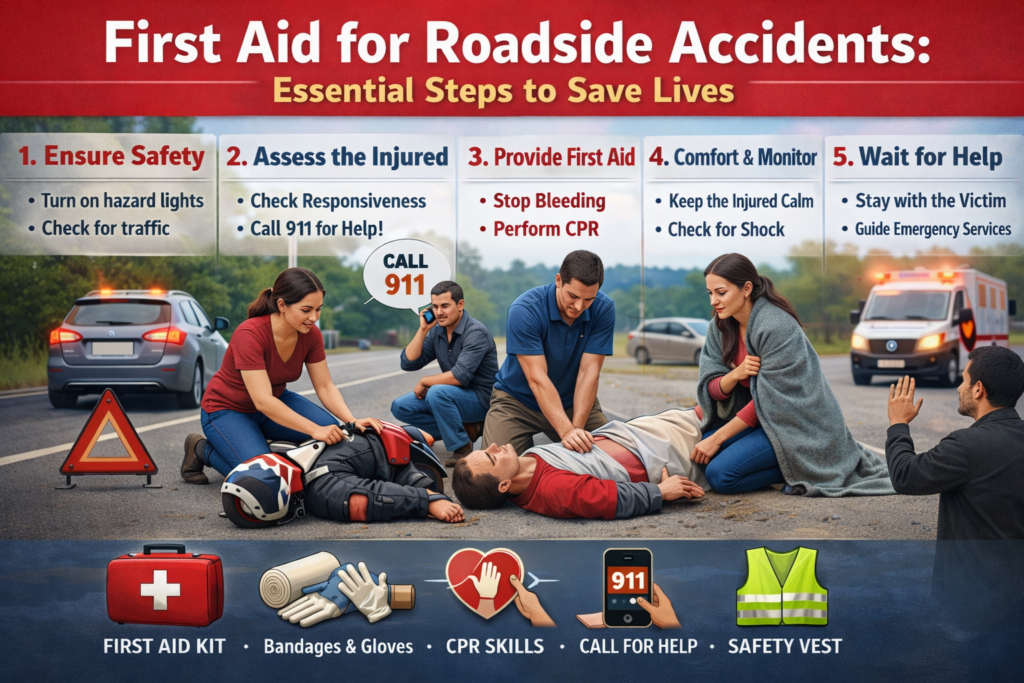
Road accidents are among the leading causes of injuries and fatalities worldwide. In many cases, immediate help before medical professionals arrive can make the difference between life and death. Understanding First Aid for Roadside Accident situations equips ordinary people with the knowledge to respond quickly and effectively.
When an accident occurs, the first few minutes are critical. Proper Roadside accident first aid can stabilize victims, prevent further injury, and significantly increase survival rates. Whether you are a driver, pedestrian, or bystander, learning First aid for road accident situations is a responsibility everyone should consider—while also knowing where to seek professional treatment afterward, such as consulting the Best Orthopaedician & Orthopaedic Surgeons in Aligarh for proper care of fractures, bone injuries, and trauma caused by road accidents.
This guide explains practical techniques, safety precautions, and Accident first aid steps that can help save lives in emergencies.
Why First Aid Matters in Road Accidents
In many accidents, emergency services may take several minutes to arrive. During this time, Emergency first aid for accidents becomes vital. Quick action can control bleeding, maintain breathing, and prevent shock.
Knowing How to give first aid after road accident situations ensures that injured individuals receive immediate support before professional treatment.
Proper First Aid for Roadside Accident response can:
- Reduce the severity of injuries
- Prevent life-threatening complications
- Provide comfort and reassurance to victims
- Increase survival chances
Learning Roadside accident first aid also promotes community safety because bystanders become capable of assisting victims responsibly.
Step 1: Ensure Scene Safety
The first and most important Accident first aid steps involve checking your own safety. Rushing into a dangerous environment can create additional victims.
Before providing First Aid for Roadside Accident victims:
- Check for oncoming traffic.
- Turn on hazard lights if you are driving.
- Move vehicles if possible and safe.
- Use warning triangles or signals.
These precautions ensure that Emergency first aid for accidents can be provided safely. Without scene safety, even trained responders cannot help effectively.
This step is always the first rule when learning How to give first aid after road accident incidents.
Step 2: Call Emergency Services Immediately
After ensuring safety, contact emergency services right away. Even if you know First aid for road accident procedures, professional medical care is essential.
Provide the following details:
- Exact location of the accident
- Number of injured people
- Type of injuries observed
- Any hazards such as fire or fuel leaks
Calling for help ensures that Emergency first aid for accidents is followed by advanced medical treatment.
When providing First Aid for Roadside Accident victims, never delay emergency calls because quick medical intervention is crucial.
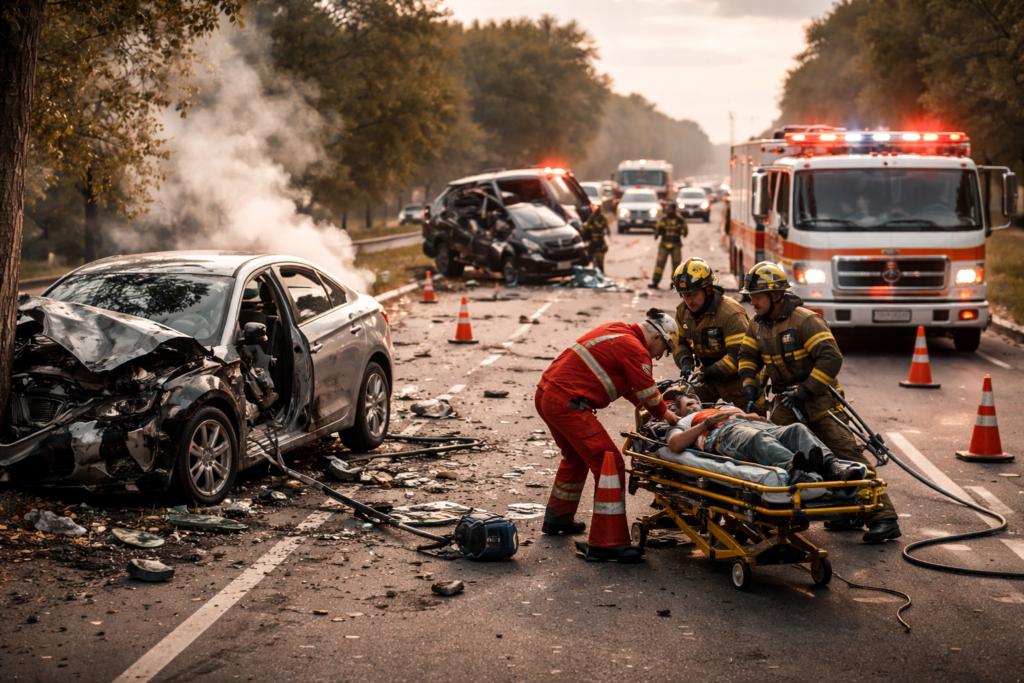
Step 3: Assess the Victims
One of the key Accident first aid steps is checking the condition of injured people.
Look for:
- Consciousness
- Breathing
- Bleeding
- Severe injuries
Understanding How to give first aid after road accident scenarios begins with assessing victims properly. Speak calmly and ask if they can hear you.
During Roadside accident first aid, avoid moving victims unless there is immediate danger such as fire or explosion.
Proper assessment helps guide the correct First aid for road accident procedures.
Step 4: Check Breathing and Airway
Breathing problems are common in serious accidents. If a victim is unconscious, checking their airway is one of the most important Accident first aid steps.
To perform Emergency first aid for accidents involving breathing issues:
- Gently tilt the head back.
- Lift the chin to open the airway.
- Look, listen, and feel for breathing.
If the victim is not breathing, CPR may be required. However, only attempt it if you are trained.
Correct airway management is a vital part of First Aid for Roadside Accident response and can prevent brain damage caused by oxygen deprivation.
Learning How to give first aid after road accident events includes recognizing breathing emergencies quickly.
Step 5: Control Bleeding
Severe bleeding is a major cause of death in accidents. Controlling blood loss is a critical part of Roadside accident first aid.
Follow these Accident first aid steps:
- Apply direct pressure to the wound.
- Use clean cloth or bandage.
- Elevate the injured area if possible.
- Continue pressure until bleeding slows.
Providing First aid for road accident victims with heavy bleeding can save lives before ambulances arrive.
In serious cases, Emergency first aid for accidents may involve using a tourniquet if trained.
This is one of the most important elements of First Aid for Roadside Accident care.
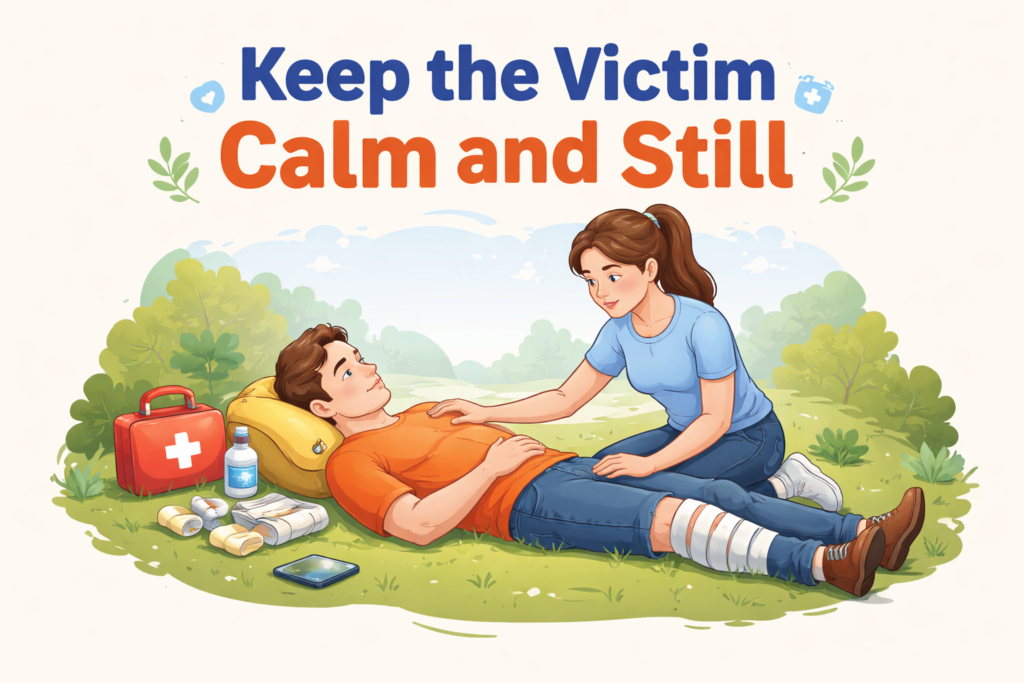
Step 6: Keep the Victim Calm and Still
Shock is a common condition after accidents. During Roadside accident first aid, keeping victims calm can prevent further complications.
When practicing How to give first aid after road accident emergencies:
- Speak calmly to reassure the victim.
- Encourage them to remain still.
- Avoid unnecessary movement.
These Accident first aid steps reduce stress and prevent worsening injuries.
Providing reassurance is a crucial but often overlooked aspect of First Aid for Roadside Accident response.
Step 7: Treat Minor Injuries
Not every injury in a crash is life-threatening. However, small wounds still require attention.
Basic First aid for road accident treatment includes:
- Cleaning minor cuts
- Applying antiseptic
- Covering wounds with sterile bandages
These actions are part of Emergency first aid for accidents that prevent infection.
Even minor care contributes to effective Roadside accident first aid and improves recovery outcomes.
Step 8: Avoid Moving Seriously Injured Victims
Many victims may suffer spinal injuries during accidents. One of the most important Accident first aid steps is avoiding unnecessary movement.
Unless there is immediate danger, do not move victims while performing First Aid for Roadside Accident assistance.
Movement can worsen spinal injuries, causing permanent damage.
Understanding How to give first aid after road accident events includes recognizing when not to intervene physically.
Proper Roadside accident first aid focuses on stabilization rather than relocation.
Step 9: Monitor the Victim Until Help Arrives
Once immediate care is given, continue monitoring the injured person.
During Emergency first aid for accidents, observe:
- Breathing changes
- Loss of consciousness
- Increased bleeding
These Accident first aid steps help you respond if the situation worsens.
Providing ongoing First Aid for Roadside Accident care ensures victims remain stable until professionals arrive.
Remaining present and attentive is an important part of First aid for road accident response.
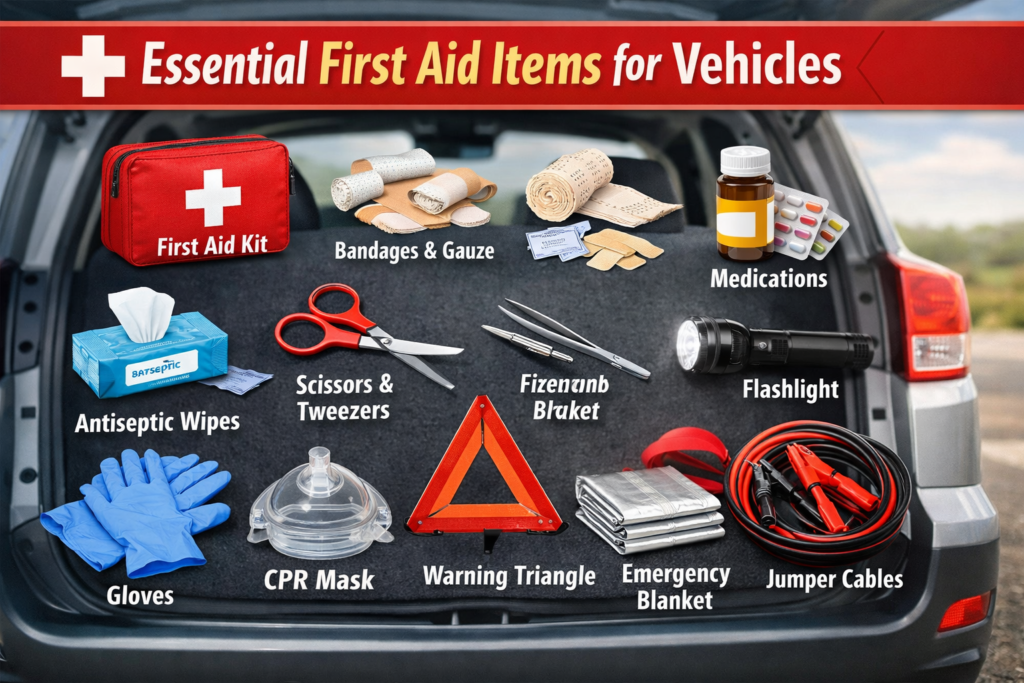
Essential First Aid Items for Vehicles
Keeping a first aid kit in your vehicle makes Roadside accident first aid more effective.
A basic kit should include:
- Sterile bandages
- Gauze pads
- Antiseptic wipes
- Adhesive tape
- Gloves
- Scissors
- CPR mask
Having these supplies helps you perform Emergency first aid for accidents more safely and efficiently.
Prepared drivers are better equipped to provide First Aid for Roadside Accident assistance when emergencies occur.
Common Mistakes to Avoid
While helping accident victims, certain mistakes can cause more harm than good.
Avoid these errors when learning How to give first aid after road accident incidents:
- Moving victims unnecessarily
- Ignoring personal safety
- Failing to call emergency services
- Giving food or drink to injured victims
Understanding proper Accident first aid steps helps prevent these mistakes.
Responsible Roadside accident first aid focuses on safety, stabilization, and quick professional help.
Importance of First Aid Training
While basic knowledge helps, formal training significantly improves your ability to respond to accidents.
Professional training teaches:
- Advanced First aid for road accident techniques
- CPR and life support
- Trauma management
- Safe victim handling
Training strengthens your confidence in performing Emergency first aid for accidents.
Anyone can learn How to give first aid after road accident emergencies through certified programs.
Investing time in training ensures you can deliver effective First Aid for Roadside Accident assistance when it matters most.
Conclusion
Road accidents can happen at any time, and immediate assistance can save lives. Understanding First Aid for Roadside Accident procedures enables bystanders to act quickly and responsibly.
By following proper Accident first aid steps, ensuring safety, controlling bleeding, and monitoring victims, anyone can contribute to lifesaving efforts. Effective Roadside accident first aid bridges the critical gap between the accident and professional medical care.
Learning How to give first aid after road accident situations empowers individuals to respond confidently during emergencies. When communities understand First aid for road accident response and provide timely Emergency first aid for accidents, countless lives can be protected.
Preparedness, awareness, and compassion are the foundations of effective accident response.