
Ankle Fracture: Symptoms, Treatment and Recovery

Common Causes of Bone Fractures in Adults: Key Risk Factors
September 28, 2026
Signs of Weak Bones You Should Not Ignore
October 6, 2026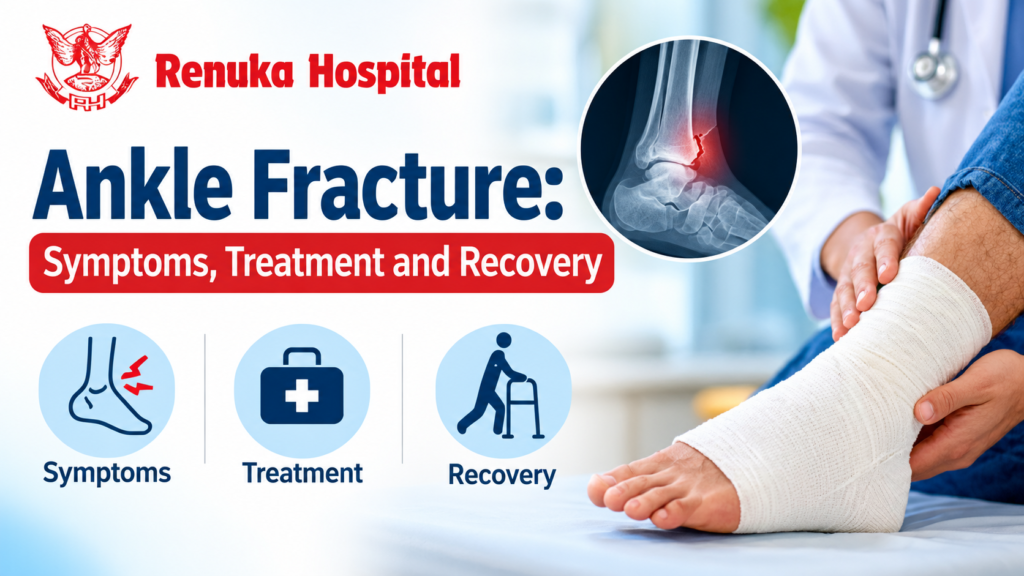
An ankle fracture can cause pain, swelling, bruising, and difficulty putting weight on the foot. It may follow a fall, sports injury, twisting force, or direct impact. Severity ranges from a stable crack to a displaced break, so early assessment is important. Renuka Hospital Aligarh provides orthopedic evaluation for fractures. If you are seeking the best orthopedic hospital in Aligarh, assessment can help determine whether imaging, immobilization, reduction, or surgery is needed.
This guide explains symptoms, diagnosis, treatment, warning signs, and recovery steps. Because every injury differs, an orthopedic professional should create the treatment plan after examination and appropriate imaging.
Ankle Fracture Symptoms You Should Know
The symptoms can vary depending on which ankle bone is affected, whether the bones have moved out of position, and whether surrounding tissues are injured. Common signs include:
- Significant ankle pain, particularly when standing or walking
- Swelling around the ankle and foot
- Bruising or tenderness
- Difficulty moving the ankle
- Inability or difficulty bearing weight
- Visible deformity when the bones have shifted
- Numbness or tingling in the foot or toes
A popping or snapping sensation may occur at the time of injury, although its absence does not rule out a fracture. Severe pain, significant swelling, deformity, or inability to bear weight should be evaluated promptly.
How Is It Different From an Ankle Sprain?
A sprain primarily affects ligaments, while a fracture involves a break in a bone. Both can cause pain, swelling, bruising, and difficulty walking, so symptoms alone cannot reliably confirm which injury has occurred. Imaging and a physical examination may be necessary for an accurate diagnosis.
When Should You Seek Emergency Care?
Get urgent medical attention if the ankle appears severely deformed, a bone is visible through the skin, there is a deep wound, pain is severe, or the toes become numb, blue, or unusually pale. These signs can indicate a serious injury requiring immediate assessment.
How Is an Ankle Fracture Diagnosed?
Diagnosis usually begins with a physical examination and discussion of how the injury occurred. The clinician checks swelling, tenderness, movement, circulation, sensation, and the overall alignment of the ankle.
X-rays are commonly used to identify a broken bone and determine its location and alignment. Depending on the injury, additional imaging may be considered to provide more detailed information about complex fractures or associated joint damage.
The treatment plan depends on factors such as the fracture pattern, bone alignment, joint stability, skin condition, and the patient’s overall circumstances. A displaced or unstable injury may require a different approach from a small, well-aligned break.
Ankle Fracture Treatment Options
Treatment aims to keep the bones properly aligned, protect the injured area, control symptoms, and restore safe function. The appropriate approach depends on the individual injury rather than a single standard treatment.
Casts, Boots, and Immobilization
Stable fractures may sometimes be managed with a cast, splint, or specialized walking boot. Immobilization limits unwanted movement while the bone heals. The healthcare professional will explain how long protection is needed and whether weight can be placed on the affected leg.
Crutches or another walking aid may be recommended when weight-bearing needs to be restricted. Patients should follow these instructions rather than increasing activity based only on how the ankle feels.
Reduction and Surgery
When the bones have shifted out of alignment, a healthcare professional may perform a reduction to return them to a better position. This can sometimes be performed without surgery, followed by a cast or splint.
Some complex, unstable, or significantly displaced injuries require surgery. Depending on the fracture, orthopedic surgeons may use plates, screws, rods, or other fixation techniques to stabilize the bones.
Renuka Hospital Aligarh can be considered as a resource for patients seeking orthopedic evaluation and guidance for bone and joint injuries. Treatment decisions should be made after an appropriate clinical examination and imaging.
Ankle Fracture Recovery: What to Expect
Recovery time varies considerably. Many uncomplicated broken ankles heal over several weeks, while more complex injuries can require a longer period before normal activities are resumed. The NHS notes that a broken ankle commonly takes around 6 to 8 weeks to heal, although individual recovery can take longer.
Recovery is not only about the bone becoming solid. After immobilization or surgery, stiffness, weakness, reduced balance, and limited movement may affect everyday activities. Rehabilitation can help address these problems.
Follow Weight-Bearing Instructions
Your orthopedic professional will tell you when and how much weight you can place on the affected leg. Avoid increasing weight-bearing, walking distance, or exercise without appropriate guidance. Premature stress may interfere with healing or aggravate the injury.
Follow a Rehabilitation Plan
Once appropriate, physical therapy may focus on restoring ankle movement, strength, balance, flexibility, and functional movement. A gradual progression can help patients return to everyday activities and, eventually, sports or higher-impact exercise when cleared.
Practical Tips for a Safer Recovery
Small daily habits can make recovery more manageable:
- Keep the injured limb elevated when advised to help manage swelling.
- Use ice only as directed and protect the skin from direct contact with frozen materials.
- Keep a cast or dressing dry and follow care instructions.
- Use crutches, walkers, or other aids correctly.
- Attend scheduled follow-up appointments.
- Take prescribed medicines according to your clinician’s instructions.
- Do not attempt to straighten a visibly deformed ankle yourself.
- Gradually return to normal activities only after medical clearance.
If swelling, pain, numbness, color changes, unusual discharge, fever, or other concerning symptoms develop during recovery, contact a healthcare professional promptly.
Quick Takeaways
- Severe pain, swelling, deformity, or difficulty bearing weight can indicate a serious ankle injury.
- X-rays are commonly used to confirm a fracture and assess alignment.
- Stable injuries may be treated with immobilization, while displaced or unstable injuries may require reduction or surgery.
- Weight-bearing should follow the instructions provided by the treating professional.
- Rehabilitation can help restore movement, strength, balance, and function.
- Recovery timelines vary, so avoid comparing your progress directly with someone else’s injury.
Conclusion
Recovery from an ankle fracture depends on fracture type, alignment, treatment, and adherence to medical advice. Do not rush back to walking, running, or sports because pain improves. Follow weight-bearing instructions, attend follow-up visits, protect the cast or boot, and complete rehabilitation. Seek prompt care if pain or swelling suddenly worsens, the foot becomes numb or changes color, or a wound shows signs of infection.
For evaluation and follow-up, Renuka Hospital Aligarh offers orthopedic care for bone and joint injuries. Visit Renuka Hospital Aligarh to learn about services and discuss symptoms with an orthopedic professional. Early diagnosis and appropriate care can support safe healing and restore mobility.
Frequently Asked Questions
1. What are the most common signs of an ankle fracture?
Pain, swelling, bruising, tenderness, difficulty moving the ankle, and trouble bearing weight are common signs. Deformity may occur when the bones have shifted.
2. Can an ankle fracture heal without surgery?
Yes, some stable and well-aligned fractures can be treated with immobilization. More severe or unstable injuries may require reduction or surgical fixation.
3. How long does it take to recover?
Many uncomplicated injuries take approximately 6 to 8 weeks for initial bone healing, but complete functional recovery can take longer depending on the injury and rehabilitation needs.
4. When can I walk normally again?
Walking progression depends on fracture stability, treatment, healing, and medical clearance. Follow the weight-bearing instructions provided by your orthopedic professional.
5. Is physiotherapy necessary after a fracture?
Rehabilitation may be recommended to restore movement, strength, balance, and function, particularly after prolonged immobilization or surgery.