Slip Disc Treatment: Symptoms and Causes

When Is Knee Replacement Surgery Necessary in Aligarh?
September 17, 2026
Fracture Treatment: When Should You Consult an Orthopedic Surgeon?
September 26, 2026
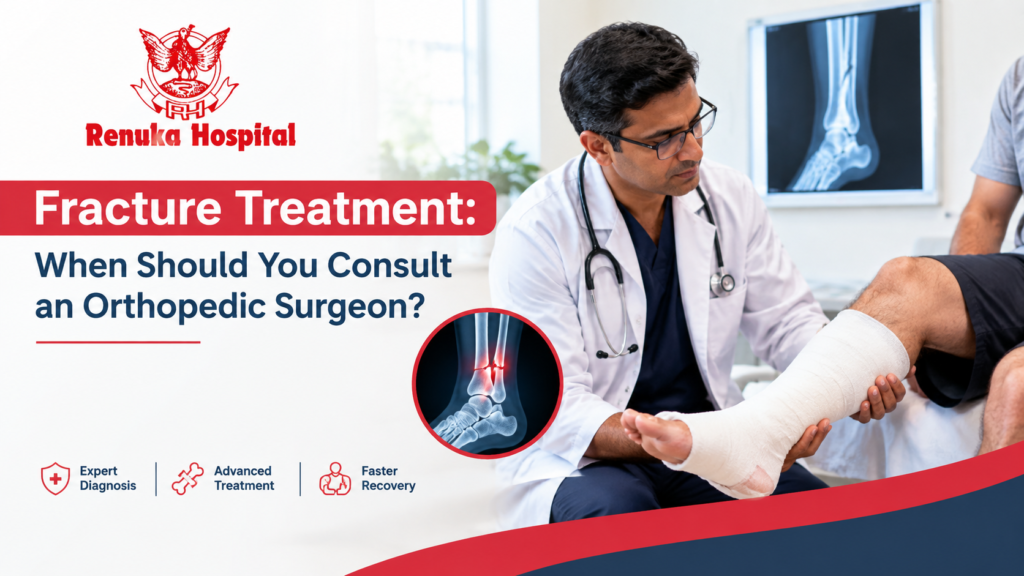
Back pain can range from mild discomfort to severe pain that affects walking, sitting, sleeping, and everyday activities. A slipped disc, also called a herniated or prolapsed disc, occurs when the soft inner material of a spinal disc pushes through a weakened outer layer and may irritate or compress nearby nerves. At Renuka Hospital Aligarh, patients with persistent back pain, numbness, or radiating leg pain can seek evaluation from qualified orthopedic specialists. Choosing an experienced orthopedic hospital in Aligarh can help identify the underlying cause and determine an appropriate treatment plan based on symptoms and examination findings.
What Is a Slipped Disc?
Understanding the spinal discs
Spinal discs are cushion-like structures positioned between the vertebrae. They help absorb pressure and allow the spine to move comfortably. With age, injury, repetitive strain, or other factors, a disc can develop weakness or damage. When its inner material protrudes through the outer layer, it can irritate nearby nerves.
The term “slip disc” is commonly used, although the disc does not literally slide out of position. A herniated disc can occur in different areas of the spine, but the lower back and neck are commonly affected. Not every disc herniation causes symptoms; some people may have a disc abnormality without experiencing pain.
Why nerve pressure matters
Symptoms often develop when the herniated material puts pressure on a spinal nerve. This can cause pain, tingling, numbness, or weakness along the affected nerve pathway. For example, a lower-back disc problem may irritate the sciatic nerve and cause pain that travels from the lower back into the buttock and leg.
Common Symptoms of a Slipped Disc
Symptoms can vary depending on the location of the affected disc and the amount of nerve irritation.
Pain and stiffness
Lower-back pain is one of the most common symptoms. Some people may experience neck pain when a cervical disc is affected. Pain can become more noticeable during certain movements, bending, lifting, coughing, or prolonged sitting.
Numbness, tingling, and weakness
Nerve compression may cause pins-and-needles sensations, numbness, or weakness in the arm, hand, leg, or foot. When symptoms travel from the lower back through the buttock and down the leg, this may be associated with sciatica.
Other possible symptoms include:
- Difficulty bending or straightening the back
- Pain that radiates into an arm or leg
- Muscle weakness
- Difficulty maintaining normal movement because of pain
- Changes in sensation along the affected nerve
The presence of back pain alone does not necessarily mean that a person has a slipped disc. A medical assessment is important when symptoms persist, become severe, or are accompanied by neurological changes.
Causes and Risk Factors
A slipped disc can develop because of gradual disc degeneration, sudden strain, or a combination of factors.
Age-related disc changes
As people age, spinal discs can lose some of their flexibility and resilience. This can make them more susceptible to tears or herniation. Degenerative changes do not always cause symptoms, but they may increase the likelihood of disc-related problems.
Lifting and physical strain
Lifting heavy objects with poor technique, repetitive bending, sudden twisting, or intense physical activity can place additional stress on the spine. A sudden injury may trigger symptoms in a disc that has already become weakened.
Prolonged sitting and inactivity
Long periods of sitting, particularly without regular movement, can contribute to back discomfort. Limited physical activity may also reduce the strength and conditioning of muscles that support the spine. Regular, appropriate movement is generally encouraged during recovery rather than prolonged bed rest.
Weight and smoking
Being overweight can increase mechanical stress on the spine. Smoking is also associated with weakened disc tissue and may contribute to spinal disc problems. Maintaining a healthy weight, staying physically active, and avoiding tobacco can support long-term spinal health.
How Is a Slipped Disc Diagnosed?
Diagnosis generally begins with a medical history and physical examination. A specialist may assess pain patterns, muscle strength, reflexes, sensation, and movement.
Imaging is not always immediately required. If symptoms continue, are severe, or suggest significant nerve involvement, an MRI may be considered because it provides detailed images of spinal discs and surrounding soft tissues. X-rays generally cannot show a herniated disc directly, although they may help identify other causes of back pain.
Slip Disc Treatment Options
The appropriate approach depends on the severity and duration of symptoms, neurological findings, and the underlying cause. Many people improve without surgery, particularly when symptoms are managed appropriately.
Medicines and activity modification
A doctor may recommend suitable pain-relieving or anti-inflammatory medicines depending on an individual’s medical history. Some patients may also receive short-term prescription medicines when clinically appropriate.
During painful periods, temporarily modifying activities that aggravate symptoms can help. However, prolonged bed rest is generally discouraged. Gradually returning to comfortable movement can support recovery.
Physiotherapy and rehabilitation
Physiotherapy may be recommended to improve movement, strength, flexibility, posture, and functional ability. A physiotherapist can design exercises according to the patient’s condition rather than recommending the same routine for everyone.
Treatment may focus on strengthening the muscles that support the spine, improving movement patterns, and reducing activities that repeatedly aggravate symptoms.
Injections and surgery
For selected patients with persistent nerve-related pain, a specialist may consider an injection such as an epidural steroid injection. Surgery is not usually the first option, but it may be considered when symptoms do not improve with conservative treatment or when there is significant or worsening neurological impairment. Procedures such as discectomy can remove the portion of disc pressing on a nerve.
When Should You See a Doctor?
Seek medical evaluation if back or neck pain continues for several weeks, repeatedly returns, interferes with daily activities, or is accompanied by numbness, tingling, or weakness. Early assessment can help distinguish disc-related symptoms from other causes of back pain.
Emergency warning signs
Certain symptoms require urgent medical attention. These include numbness around the genitals or buttocks, inability to urinate, loss of bladder or bowel control, or significant loss of sensation or function in one or both legs. These symptoms can indicate serious nerve compression and should not be ignored.
Practical Tips for Protecting Your Spine
Small daily habits can help reduce unnecessary strain on the back:
- Maintain regular, comfortable physical activity.
- Use proper lifting techniques and avoid twisting while lifting.
- Take movement breaks during long periods of sitting.
- Maintain a healthy body weight.
- Follow a physiotherapist’s exercise plan consistently.
- Avoid smoking.
- Do not return to strenuous exercise suddenly after a painful episode.
The goal is not to avoid movement completely but to find a safe level of activity and gradually build strength and mobility.
Quick Takeaway
A slipped disc can cause back or neck pain, sciatica, numbness, tingling, and muscle weakness when a spinal nerve becomes irritated or compressed. Age-related disc changes, physical strain, poor lifting technique, prolonged inactivity, excess body weight, and smoking can contribute to risk. Most cases can initially be managed without surgery, using appropriate medication, activity modification, physiotherapy, and rehabilitation. Persistent or worsening symptoms require professional assessment.
Conclusion
Understanding the symptoms and causes of a slipped disc can help you recognize when professional evaluation is needed. While many cases improve with non-surgical care, treatment should be individualized according to the location of the disc problem, severity of symptoms, and presence of nerve compression. Renuka Hospital Aligarh provides an option for people seeking orthopedic evaluation and guidance for persistent back pain, sciatica, numbness, or weakness. If symptoms are severe, progressive, or associated with bladder, bowel, or significant neurological changes, prompt medical attention is important.
FAQs
1. What is a slipped disc?
A slipped disc occurs when the inner material of a spinal disc pushes through a weakened outer layer and may irritate nearby nerves.
2. Can a slipped disc heal without surgery?
Yes. Many people improve with conservative care such as appropriate medication, physiotherapy, activity modification, and gradual rehabilitation.
3. Does a slipped disc always cause pain?
No. Some disc herniations may not cause noticeable symptoms.
4. Can physiotherapy help with a slipped disc?
Physiotherapy may help improve movement, strength, flexibility, and function, depending on the individual’s condition.
5. When is surgery considered?
Surgery may be considered when symptoms remain despite appropriate non-surgical treatment or when significant or worsening nerve problems are present.