When Is Knee Replacement Surgery Necessary in Aligarh?

Knee Replacement Surgery: Benefits and Recovery in Aligarh
September 16, 2026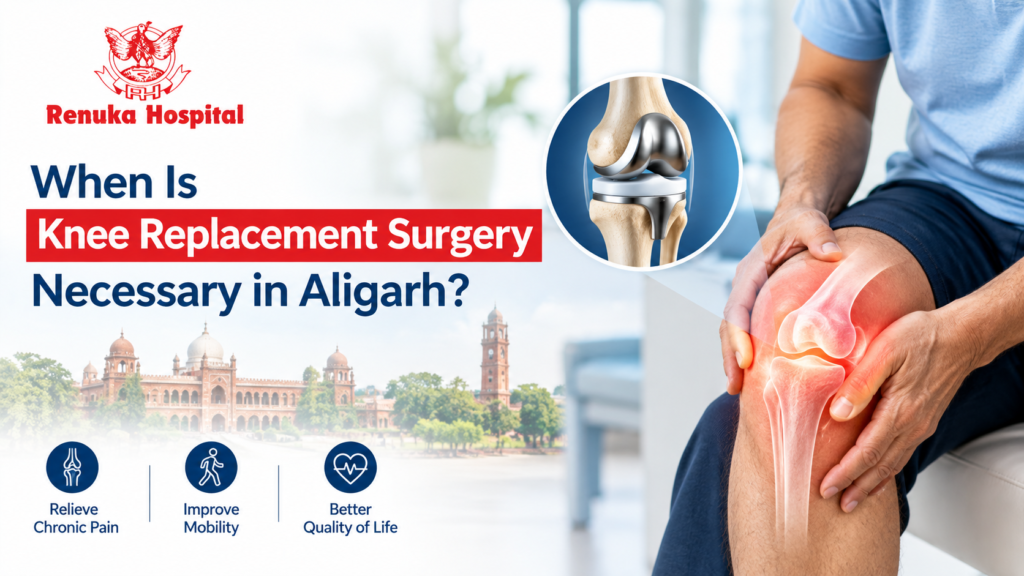
Knee replacement surgery is considered when persistent knee pain and joint damage make everyday activities difficult despite appropriate non-surgical treatment. For patients seeking guidance, Renuka Hospital Aligarh can provide orthopedic evaluation and individualized treatment planning. Choosing the best Orthopedic Hospital in Aligarh can help ensure the decision is based on examination, imaging, symptoms, mobility, and health rather than pain alone.
People with osteoarthritis wonder when knee surgery becomes necessary. The answer depends on joint damage, response to treatment, and its impact on quality of life. A specialist can explain whether conservative care, injections, physiotherapy, or knee replacement is appropriate.
What Is Knee Replacement Surgery?
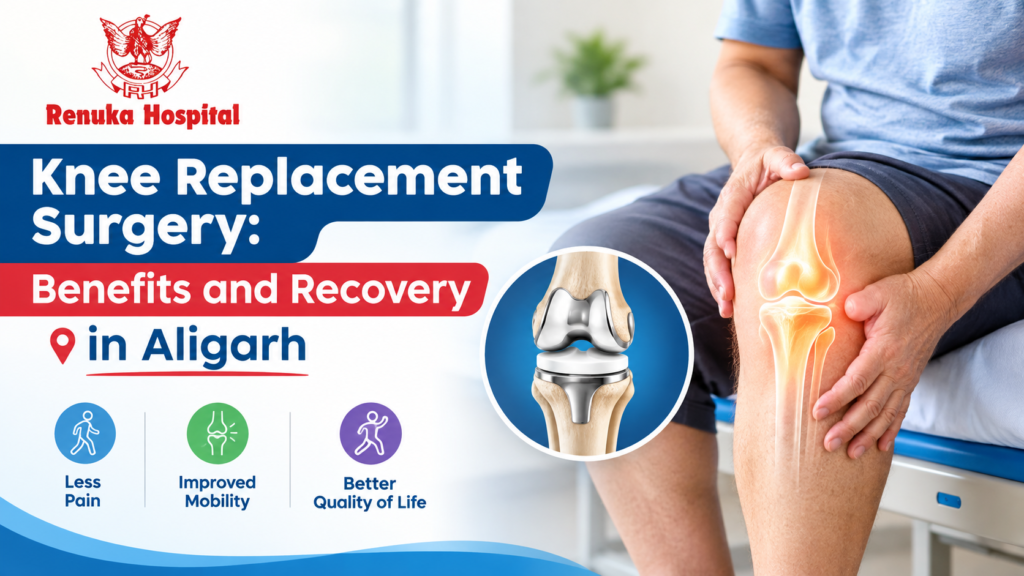
Knee replacement surgery replaces damaged surfaces of the knee joint with artificial components to reduce pain and improve function. It may involve the entire joint or only a damaged compartment, depending on the pattern of arthritis and the patient’s condition.
The goal is not simply to treat an X-ray finding. Doctors consider symptoms, mobility, physical examination, imaging, age, activity needs, and response to earlier treatments before recommending an operation.
When Is Knee Replacement Surgery Necessary?
The procedure is generally considered when several problems occur together rather than because of one symptom alone.
Persistent pain that limits daily life
Severe knee pain that continues during walking, climbing stairs, standing, or resting can indicate advanced joint disease. If pain regularly interferes with sleep, work, household activities, or personal independence, an orthopedic assessment is appropriate.
Advanced osteoarthritis or joint damage
Osteoarthritis can gradually wear away cartilage and cause stiffness, swelling, deformity, and reduced movement. When imaging shows substantial joint damage and symptoms match those findings, knee replacement surgery may become an option.
Non-surgical treatment no longer provides enough relief
Many patients first try exercise-based physiotherapy, weight management when appropriate, activity modification, medicines, walking aids, or injections. If these measures have been used appropriately but severe knee pain continues to restrict life, surgery may be discussed.
Reduced mobility and loss of independence
Difficulty walking short distances, getting out of a chair, using stairs, or completing routine activities is an important part of the decision. The key question is how the knee affects function, not just how it looks on an X-ray.
What Factors Does an Orthopedic Surgeon Consider?
A careful decision combines several clinical factors.
Symptoms and physical examination
Your doctor checks pain location, stiffness, swelling, alignment, range of motion, muscle strength, walking pattern, and stability. This helps determine whether the knee is actually the main source of disability.
Imaging and degree of arthritis
X-rays can show narrowing of the joint space, bone changes, alignment problems, and other signs of degeneration. MRI or other imaging may be useful in selected cases, but it is not automatically required for every patient.
Overall health and readiness
Conditions such as uncontrolled medical problems, infection, poor nutritional status, or limited ability to participate in rehabilitation may affect timing. Your surgeon may recommend optimizing these issues before an operation.
Can Knee Replacement Be Avoided?
Not every person with osteoarthritis needs surgery. Early or moderate osteoarthritis may often be managed with a structured plan that includes strengthening, flexibility exercises, weight management where relevant, appropriate pain relief, and changes to activities that aggravate symptoms.
However, delaying treatment solely because of fear can also prolong disability. If conservative care is no longer controlling severe knee pain or maintaining useful mobility, a specialist discussion can clarify the next step.
What Should You Expect After Surgery?
Knee replacement recovery usually begins with movement and rehabilitation soon after the procedure. Hospital stay and rehabilitation needs vary according to the operation, health, mobility, and local clinical protocols.
Rehabilitation matters
Exercises help restore range of motion, strength, balance, and confidence. Following the physiotherapy plan and gradually increasing activity are important parts of knee replacement recovery, which is an important part of knee replacement recovery.
Recovery takes time
Each knee replacement recovery timeline can differ. Some people resume basic daily activities relatively quickly, while strength and endurance continue improving over subsequent weeks and months. Your surgeon and physiotherapist should provide individualized restrictions for driving, work, exercise, and other activities.
Practical Tips Before Making a Decision
- Keep a record of when pain occurs, what activities trigger it, and how it affects sleep and daily tasks.
- Bring previous X-rays, medication details, and reports to your orthopedic consultation.
- Ask which non-surgical options remain reasonable and how long they should be tried.
- Discuss expected benefits, possible complications, implant options, rehabilitation, and realistic recovery milestones.
- If a recommendation is unclear, consider a second orthopedic opinion before scheduling surgery.
These steps can make discussions about knee replacement surgery more informed and personalized.
Quick Takeaway
Knee replacement surgery is usually considered when advanced knee damage causes persistent symptoms and meaningful loss of function, and appropriate non-surgical treatment has not provided sufficient relief. The decision should be individualized after an orthopedic examination rather than based on age or an X-ray alone.
If you are experiencing severe knee pain, worsening stiffness, deformity, or increasing difficulty walking, arrange an evaluation rather than continuing to self-manage indefinitely. Early specialist assessment can also identify treatment options that may postpone or prevent an operation when clinically appropriate.
Conclusion
Knowing when knee replacement surgery is necessary starts with understanding the difference between manageable arthritis and knee disease that is seriously affecting daily life and advanced osteoarthritis that is affecting mobility.
A thorough assessment considers symptoms, examination findings, imaging, overall health, and previous treatment response. Renuka Hospital Aligarh can help patients discuss their condition, available options, preparation, and rehabilitation needs with an orthopedic team.
FAQs
1. What age is best for knee replacement surgery?
There is no single ideal age. Doctors consider pain, joint damage, function, overall health, and whether symptoms significantly affect quality of life.
2. Can severe knee pain be treated without surgery?
Sometimes. Physiotherapy, exercise, weight management where appropriate, medicines, activity changes, or injections may help depending on the underlying condition.
3. Is an X-ray enough to decide on knee replacement?
An X-ray is useful, but the decision also depends on symptoms, physical examination, functional limitations, health, and previous treatment response.
4. How long does knee replacement recovery take?
Recovery varies between patients. Basic mobility may improve early, while strength, endurance, and confidence can continue developing for weeks or months with rehabilitation.
5. What happens if I delay knee replacement?
The effect varies. Some people remain stable with non-surgical care, while others experience worsening pain and reduced mobility. An orthopedic assessment can help determine the appropriate timing.