What is the IVF process and how successful is it?

5 Essential Steps to Protect Your Baby’s Umbilical Hernia
February 26, 2026
Transform Your Recovery with Modern Slip Disc Treatment Options
March 11, 2026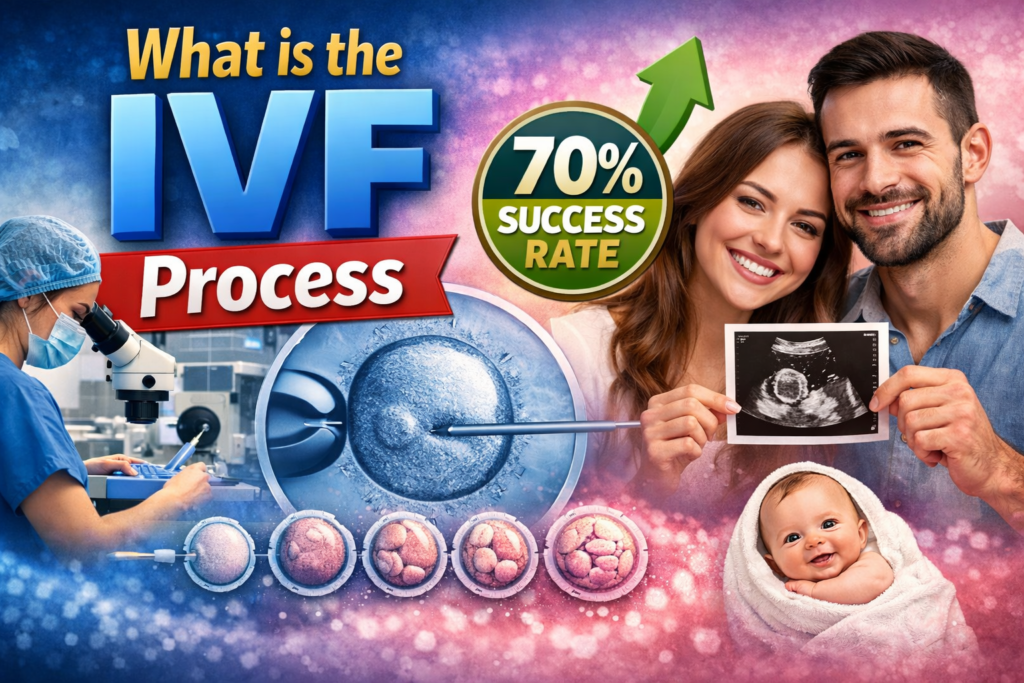
In today’s world, the dream of becoming a parent is closer than ever, thanks to medical science. If you have been searching for answers about fertility, you have likely come across the term IVF. Conditions like Thyroid Disorders in Fertility can also play a significant role in reproductive health and may affect a couple’s ability to conceive.
But what exactly is the IVF process, and how successful is it really? This guide will break down everything you need to know in simple, easy-to-understand language.
What is IVF?
IVF stands for In Vitro Fertilization. In Latin, “In Vitro” means “in glass.” This refers to the fact that the fertilization of an egg happens in a laboratory dish rather than inside the human body.
Think of IVF as a helping hand. It takes the natural steps of conception and moves them to a controlled environment where scientists and doctors can give the process the best possible chance of working.
The IVF Process: A Step-by-Step Guide
The journey of IVF is usually broken down into a “cycle.” One cycle typically takes about 2 to 3 weeks, though the preparation can take a bit longer. Here are the 6 main steps:
1. Ovarian Stimulation
Normally, a woman’s body produces one egg per month. In IVF, the goal is to have multiple eggs. To do this, you will take fertility medications (usually small injections) for about 8 to 14 days. These “stimulate” your ovaries to grow several eggs at once.
2. Monitoring
During the stimulation phase, you will visit your clinic frequently for blood tests and ultrasounds. Doctors use these to check how your follicles (the sacs holding the eggs) are growing.
3. Egg Retrieval
Once the eggs are ready, a minor procedure is performed to collect them. You will be under light sedation, so you won’t feel any pain. The doctor uses a very thin needle, guided by ultrasound, to gently remove the eggs from the ovaries.
4. Fertilization in the Lab
On the same day the eggs are collected, a sperm sample is provided (by a partner or donor). In the lab, the eggs and sperm are combined.
- Standard IVF: The sperm is placed in a dish with the egg to fertilize naturally.
- ICSI: If the sperm needs extra help, a single healthy sperm is injected directly into the egg.
5. Embryo Culture
The fertilized eggs—now called embryos—are kept in a special incubator that mimics the conditions of the human body. Scientists watch them grow for 3 to 5 days until they reach a healthy stage (often called the blastocyst stage).
6. Embryo Transfer
This is the final and most exciting step. The doctor places one or two healthy embryos into the uterus using a thin, flexible tube (catheter). It feels similar to a regular pelvic exam or a Pap smear and usually takes less than 10 minutes.
How Successful is IVF?
Success rates are the first thing most people ask about. While IVF is the most effective form of assisted reproduction, it is important to have realistic expectations.
Success Rates by Age (Averages for 2026)
Age is the biggest factor in IVF success because egg quality and quantity naturally change over time.
| Age Group | Success Rate per Cycle (Live Birth) |
| Under 35 | 50% – 60% |
| 35 – 37 | 40% – 45% |
| 38 – 40 | 25% – 35% |
| Over 40 | 10% – 20% |
Note: Many people find success on their second or third attempt. The “cumulative” success rate (after 3 tries) is often as high as 70% to 80% for younger patients.
Factors That Influence Success
- Egg & Sperm Quality: Healthier cells lead to stronger embryos.
- Lifestyle: Maintaining a healthy weight, avoiding smoking, and reducing stress can improve your odds.
- The Clinic’s Lab: Advanced technology and experienced embryologists make a big difference.
What to Expect Emotionally and Physically
Going through IVF is a big step. Physically, you might feel some bloating or mild cramping from the medications. Emotionally, it can be a “rollercoaster” of hope and anxiety.
Tips for a smoother journey:
- Ask Questions: Never be afraid to ask your doctor to explain something twice.
- Build a Support System: Talk to your partner, a friend, or a counselor.
- Focus on Self-Care: Eat well, sleep plenty, and keep your body moving gently (like walking).
Common Myths About IVF
Myth 1: IVF always results in twins or triplets.
- Truth: Nowadays, doctors prefer “Single Embryo Transfer” (SET) to ensure a safer pregnancy for both the mother and the baby.
Myth 2: You have to stay in bed after the transfer.
- Truth: You can go back to your normal daily activities almost immediately. Gravity won’t affect the embryo!
Myth 3: IVF is the only option for infertility.
- Truth: Many couples start with simpler treatments like IUI (insemination) before moving to IVF.
The Future of IVF Technology
The future of In Vitro Fertilization (IVF) is becoming more advanced with the help of modern medical technologies. New research and innovations are improving the chances of successful pregnancies and making treatments safer and more efficient.
Scientists and fertility specialists are continuously developing better methods to support couples who are struggling with infertility. These advancements are helping IVF become more accurate, personalized, and accessible for many families.
Key advancements in IVF technology include:
- Genetic Testing: Advanced screening helps identify healthy embryos and reduces the risk of genetic disorders.
- Artificial Intelligence (AI): AI technology helps doctors select the best-quality embryos for transfer.
- Improved Embryo Freezing: Modern freezing techniques allow embryos to be safely stored for future use.
- Fertility Preservation: Egg and embryo freezing help individuals plan pregnancy at a later stage.
- Advanced Lab Technology: Modern IVF laboratories improve fertilization and embryo development success.
With these innovations, IVF treatment is expected to become more successful and widely available. The future of IVF technology offers new hope for couples who dream of starting a family.
Conclusion
The IVF process is a remarkable journey of science and hope. While the steps might seem complex, your medical team, including Obstetrician Doctors in Aligarh, is there to guide you through every injection and ultrasound. Remember that every “body” is different, and success often comes with patience and persistence.