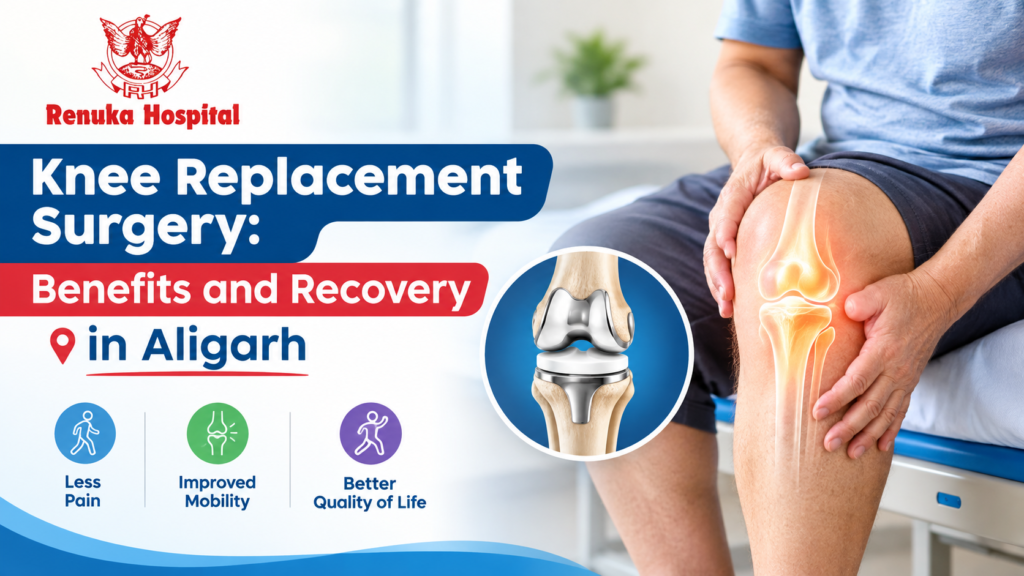
Knee Ligament Injury: Symptoms, Treatment, Recovery and Prevention

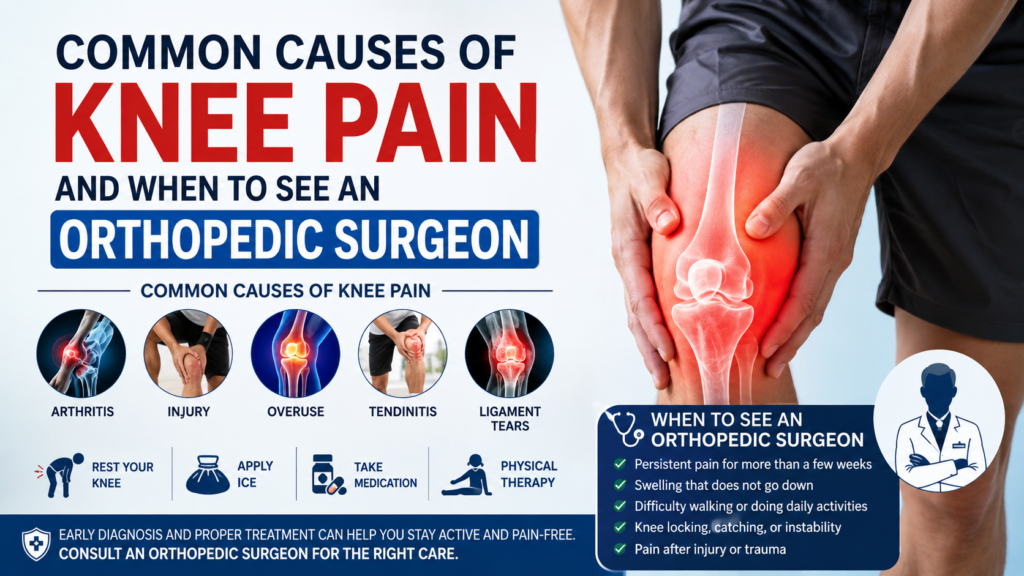
Common Causes of Knee Pain and When to See an Orthopedic Surgeon
August 7, 2026
Knee Replacement Surgery: Benefits and Recovery in Aligarh
September 16, 2026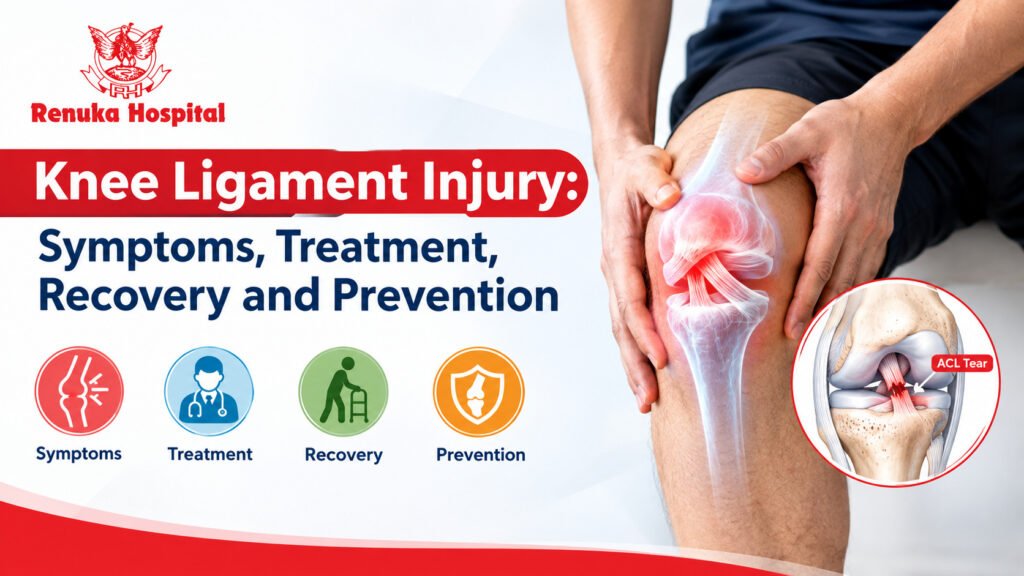
A knee ligament injury can occur suddenly during sports, a fall, an accident, or an awkward twisting movement. Common symptoms include sharp knee pain, swelling, tenderness, stiffness, instability, and difficulty walking or putting weight on the affected leg. Early medical assessment is important to identify whether the ligament has been overstretched, partially torn, or completely ruptured. A proper diagnosis may involve a physical examination and, when necessary, imaging tests such as an MRI to understand the extent of the damage.
Timely treatment can help reduce pain, restore knee stability, and support a safe recovery. People experiencing persistent symptoms or difficulty moving the knee may seek specialist guidance from the best Orthopaedician in Aligarh. Renuka Hospital can provide appropriate evaluation, treatment planning, and rehabilitation guidance based on the severity of the injury. Following medical advice and avoiding strenuous activity during recovery can also help prevent further damage.
What Is a Knee Ligament Injury?
A knee ligament injury occurs when one or more strong bands of tissue supporting the knee are overstretched or torn. The knee has four major ligaments: the anterior cruciate ligament (ACL), posterior cruciate ligament (PCL), medial collateral ligament (MCL), and lateral collateral ligament (LCL).
The ACL and PCL control forward, backward, and rotational movement, while the MCL and LCL provide side-to-side stability. Injuries range from mild sprains to complete tears. Treatment depends on the ligament and injury severity.
Common Symptoms of a Knee Ligament Injury
Symptoms may appear immediately or develop over several hours. Common signs include:
- Sudden knee pain, especially at the time of injury
- Rapid swelling
- A popping or snapping sensation
- Difficulty putting weight on the leg
- Reduced range of motion
- A feeling that the knee may give way
A severe tear may make walking difficult or cause significant instability. Symptoms alone cannot identify the damaged ligament, so medical examination is important.
What Causes Ligament Damage?
A knee ligament injury commonly occurs during sudden stopping, pivoting, landing, or changing direction. Football, basketball, skiing, and similar sports can increase risk. Falls, road accidents, and direct blows can also damage ligaments.
Some injuries happen without contact, such as when the foot remains planted while the body turns sharply. Muscle weakness, poor landing technique, previous injury, inadequate conditioning, and fatigue can also contribute.
How Is a Knee Ligament Injury Diagnosed?
Diagnosis of a knee ligament injury starts with a medical history and physical examination. A clinician checks swelling, movement, and stability.
Imaging Tests
An X-ray can help rule out fractures and other bone problems. MRI is useful for examining ligaments, cartilage, menisci, and other soft tissues. Tests should be selected according to clinical findings.
Prompt evaluation is especially important when the knee is severely swollen, deformed, locked, numb, or unable to bear weight.
Treatment for Knee Ligament Tear
For a knee ligament injury, the treatment for a knee ligament tear depends on the ligament involved and whether the damage is partial or complete. Mild sprains may improve with activity modification, supportive care, and rehabilitation. More serious injuries may require bracing, structured physiotherapy, or surgery.
During the early stage, relative rest, ice, compression, and elevation may help control pain and swelling. Pain-relieving medicines may be appropriate for some people but should be used according to medical advice.
Choosing the Treatment for a Knee Ligament Tear
The best approach depends on symptoms, examination findings, activity goals, and the extent of damage.
When Is Surgery Needed?
Surgery may be considered for selected complete ACL tears, combined ligament injuries, persistent instability, or people who need high knee function for sport or work. The decision should be individualized.
Rehabilitation is important with or without surgery. Physiotherapy can restore movement, strengthen the quadriceps and hamstrings, improve balance, and gradually rebuild functional confidence.
How to Heal Ligaments Faster
Many people ask how to heal ligaments faster after an injury. There is no safe shortcut that instantly repairs torn ligament tissue. If you are researching how to heal ligaments faster, focus on steady, medically guided progress.
Helpful habits include:
- Follow recommended activity restrictions.
- Complete prescribed physiotherapy consistently.
- Increase activity gradually.
- Eat a balanced diet with adequate protein, vitamins, and minerals.
- Avoid smoking because it can interfere with tissue healing.
- Prioritize sleep and recovery.
- Attend follow-up appointments when advised.
Trying to exercise through significant pain or instability may delay recovery or worsen the injury. Controlled progression is safer than rushing back to normal activity. This is another key principle in How to heal ligaments faster.
Recovery Timeline
Recovery after a knee ligament injury varies. A mild sprain may improve within weeks, while a major tear or surgical reconstruction can require several months. Return to sport should depend on strength, movement quality, stability, confidence, and functional testing rather than the calendar alone.
Key Recovery Stages
Early phase: Control pain and swelling while protecting the knee.
Mobility phase: Restore comfortable movement and reduce stiffness.
Strength phase: Build the quadriceps, hamstrings, glutes, and calf muscles.
Functional phase: Add balance, coordination, agility, and work- or sport-specific movements.
Return-to-activity phase: Resume demanding activities after meeting appropriate clinical and functional criteria.
Renuka Hospital can be a point of care for patients seeking evaluation, treatment planning, and rehabilitation guidance for knee problems. An internal link to a related knee pain or physiotherapy guide can also help readers understand rehabilitation options in greater detail.
Prevention Tips
Although not every knee ligament injury can be prevented, several habits can reduce risk:
- Warm up before exercise and competition.
- Strengthen the legs, hips, and core regularly.
- Practice safe landing and change-of-direction techniques.
- Improve balance and coordination.
- Avoid playing through significant pain or fatigue.
- Complete rehabilitation after a previous injury.
For athletes, neuromuscular training that combines strength, balance, agility, and landing technique can be particularly helpful.
When Should You See a Doctor?
Seek medical assessment after a significant knee injury if you hear a pop, develop rapid swelling, cannot bear weight, experience repeated giving-way, or cannot fully bend or straighten the knee. Urgent care may be necessary for severe deformity, loss of sensation, a cold or pale foot, or intense pain after major trauma.
Early diagnosis can also identify associated meniscus or cartilage damage.
Quick Takeaways
- Ligament injuries range from mild sprains to complete tears.
- Rapid swelling, instability, pain, and popping are common warning signs.
- Treatment may include protection, rehabilitation, bracing, or surgery.
- Strength training, good movement technique, and proper rehabilitation can reduce future risk.
- Recovery should be gradual and based on functional improvement rather than time alone.
Conclusion
A knee ligament injury should not be ignored when swelling, instability, or difficulty bearing weight follows trauma. Early assessment identifies the damaged structure and guides treatment. The Treatment for a knee ligament tear may range from rehabilitation and activity modification to surgery, depending on injury severity and the patient’s goals.
If you are wondering how to heal ligaments faster, focus on supervised rehabilitation, adequate nutrition, gradual loading, good sleep, and avoiding habits that interfere with recovery. Renuka Hospital can support patients through evaluation and treatment planning, while follow-up helps ensure recovery progresses safely. With timely care and rehabilitation, many people can regain knee strength and stability.
FAQs
1. What are the common symptoms of a knee ligament injury?
Pain, swelling, stiffness, instability, and a popping sensation are common symptoms.
2. How long does a knee ligament injury take to heal?
Recovery can take a few weeks for mild injuries and several months for severe tears or surgery.
3. Can a torn knee ligament heal without surgery?
Some partial tears can improve with rest, bracing, and physiotherapy, while complete or unstable tears may require surgery.
4. How can I prevent knee ligament injuries?
Strengthening exercises, proper warm-ups, balance training, and safe movement techniques can reduce the risk.
5. When should I see a doctor for knee pain?
See a doctor if you have severe pain, rapid swelling, instability, difficulty walking, or a popping sound after an injury.